

Anyone who has boiled a pot of water understands that it takes both time and energy to raise the temperature, so it may come as a surprise to learn that scientists have long treated marine heatwaves (MHWs) as isolated events.
Anyone who has boiled a pot of water understands that it takes both time and energy to raise the temperature, so it may come as a surprise to learn that scientists have long treated marine heatwaves (MHWs) as isolated events. New research led by William & Mary's VIMS & Batten School is challenging that narrative by providing a framework to characterize an ecosystem’s cumulative heat exposure from MHWs and the extended periods of warm water that precede and follow them.
The study, published in Nature’s Communications Earth & Environment, classifies periods of warming leading up to and following MHWs and provides a framework for assessing cumulative heat exposure. The research aims to provide a more effective measure of ecological impacts by treating MHWs as part of broader warming events, rather than isolated events, based on long-term observations from across 20 U.S. estuaries.
"We started to notice these warm-water anomalies on either side of marine heatwaves and realized that they’re actually embedded within larger periods of warm water," explained lead author Ricardo Utzig Nardi M.S. ‘25, a research specialist working with coauthor Piero Mazzini, assistant professor at VIMS & the Batten School of Coastal & Marine Sciences. “It sounds obvious, but studies usually focus only on the marine heatwave window and that’s not an accurate representation of real-world conditions.”
Read More at: Virginia Institute of Marine Science
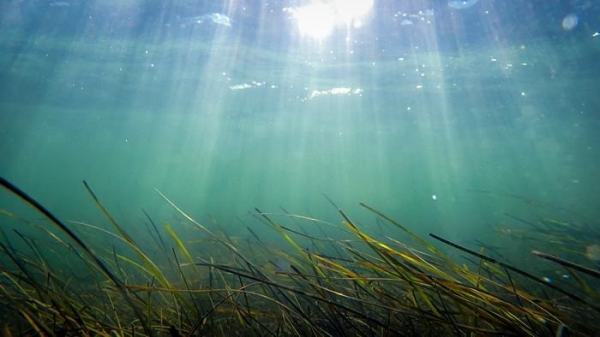
Periods of sustained warming can last for weeks to months at a time, with a distinct marine heatwave embedded between them and significant implications for estuarine ecosystems and habitats like seagrass beds. (Photo Credit: Jonathan Lefcheck)


