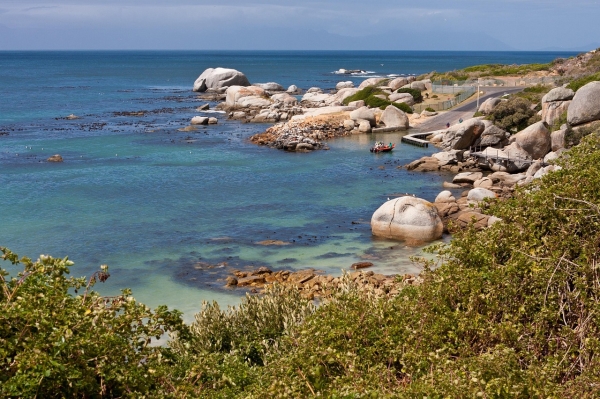
False Bay’s waters and sediments contain a cocktail of pharmaceuticals, pesticides and metals linked to urban development, wastewater discharges and harbour activities, according to a new study led by researchers from the University of Cape Town (UCT).
False Bay’s waters and sediments contain a cocktail of pharmaceuticals, pesticides and metals linked to urban development, wastewater discharges and harbour activities, according to a new study led by researchers from the University of Cape Town (UCT).
The study, published in Marine Pollution Bulletin, investigated the presence and ecological effects of selected pharmaceutical compounds, herbicides and metals across 19 sampling stations in False Bay between April and June 2021. Researchers detected pharmaceuticals such as acetaminophen, carbamazepine and diclofenac, along with the herbicides atrazine and metolachlor, in both seawater and marine sediments throughout the bay.
The findings revealed that contaminant concentrations were generally much higher in sediments than in seawater, suggesting that the seabed acts as a long-term storage reservoir for pollution entering the bay.
“We found that pharmaceuticals and herbicides are widespread throughout False Bay and that sediments appear to retain these contaminants over extended periods,” said Dr Buyani Mazeka, the study’s lead researcher and a postdoctoral fellow at UCT’s Department of Biological Sciences.
Read More: University of Cape Town - Faculty of Science
Photo Credit: stephencphotog via Pixabay