A new study analyzed data from multiple independent sources, ranging from satellite remote sensing-based machine learning products to state-of-the-art Earth System Models, to reveal how climate change shapes the Northern Eurasian carbon sink.
A new study analyzed data from multiple independent sources, ranging from satellite remote sensing-based machine learning products to state-of-the-art Earth System Models, to reveal how climate change shapes the Northern Eurasian carbon sink. The study confirms that Northern Eurasia accounts for nearly one-third of the global terrestrial carbon sink. It also shows that, despite warming faster than most regions worldwide, the northern high latitudes contribute little to strengthening the Northern Eurasian carbon sink because of their low baseline carbon uptake.
Northern Eurasia contains about 20% of the world's forests and plays a crucial role in mitigating climate change by absorbing atmospheric carbon dioxide, thereby acting as a major carbon sink. However, understanding the region's carbon sink is challenging because it is influenced by multiple interacting factors, including rapid climate change, wildfires, land-use change, and limited observational coverage across its vast extent.
A new study integrated evidence from multiple independent sources, including satellite observations, data-driven products, atmospheric inversion models, dynamic global vegetation models, and Earth System Models, to investigate how climate and climate change shape the Northern Eurasian carbon sink. Despite substantial differences among the data sources, the study found broad agreement that Northern Eurasian ecosystems absorb approximately 0.47 ± 0.20 billion tonnes of carbon annually, accounting for nearly one-third of the global terrestrial carbon sink.
Read More: University of Tsukuba
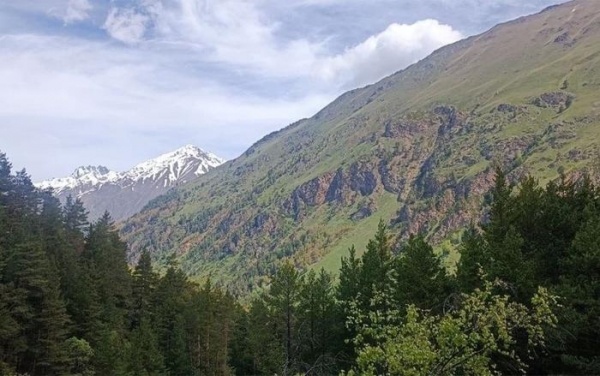
Image: Dense forest landscape near Mount Elbrus in Northern Eurasia (southern part) (Credit: Andrey Kurochkin)