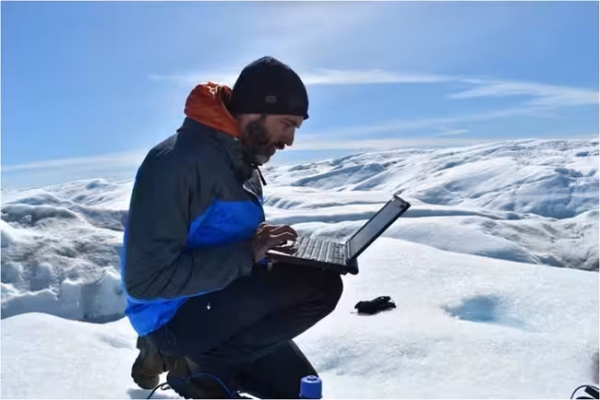
Marco Tedesco does not sound like a man trying to sell artificial intelligence.
Marco Tedesco does not sound like a man trying to sell artificial intelligence.
He does not describe it as a revolution that will save science, nor does he dismiss it as a fad. Despite having worked with artificial intelligence since the late 1990s, he remains cautious about the optimism surrounding the technology.
For Tedesco, a research professor at the Lamont-Doherty Earth Observatory, which is part of the Columbia Climate School, AI is already inside the room. The question is no longer whether researchers should engage with it, but whether they can do so without surrendering their judgment, ethics or curiosity.
Read more at: Columbia Climate School
Permafrost in the Arctic stores large quantities of organic carbon. When the frozen ground thaws or coastal sections erode, this carbon can enter the sea, where microorganisms can break it down and convert it into climate-damaging greenhouse gases. (Photo Credit: die9ov via Alfred-Wegener-Institut / Jaroslav Obu)