From the American West to Europe, droughts are drying up rivers, fueling destructive fires and reshaping ecosystems.
From the American West to Europe, droughts are drying up rivers, fueling destructive fires and reshaping ecosystems. They are also changing the spread of infectious diseases, leading to surges in illnesses like cholera and West Nile virus around the world.
In a review paper published August 12 in Trends in Ecology & Evolution, CU Boulder ecologist, Pieter Johnson, and his collaborator, Tara Stewart Merrill at the Cary Institute of Ecosystem Studies, reveal how drier conditions could make humans and wildlife more vulnerable to certain infectious diseases, even though many parasites and disease-carrying organisms depend heavily on water to survive.
“Climate change isn't simply making Earth warmer or drier,” said Johnson, distinguished professor in the Department of Ecology and Evolutionary Biology. “It is making droughts more variable and less predictable. That unpredictability is becoming one of the defining challenges for understanding and managing disease in natural ecosystems.”
Read More: University of Colorado at Boulder
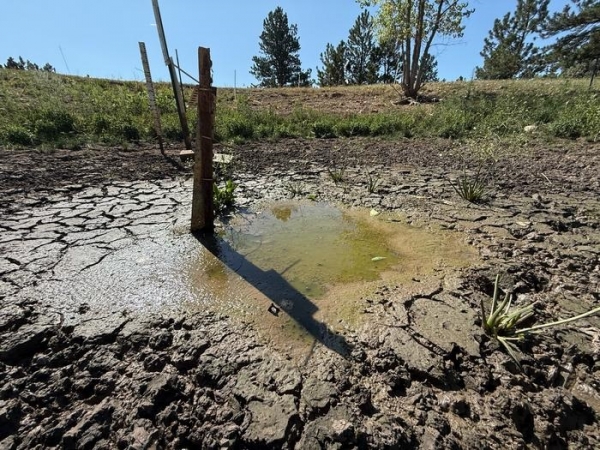
A pond in Shanahan Ridge in Boulder, Colorado. It has gone dry for the first time in many years this summer due to the lack of snow in the area last winter. (Photo Credit: NPieter Johnson/CU Boulder)