The American Meteorological Society released its annual report on the global climate this week, with many researchers from the University of Alaska Fairbanks participating.
The American Meteorological Society released its annual report on the global climate this week, with many researchers from the University of Alaska Fairbanks participating.
“State of the Climate in 2025” provides the latest updates on global climate-related research. It provides a big-picture view of what was learned last year from data collected on parts of the complex story of environmental change. It also includes details and reflection on extreme weather events.
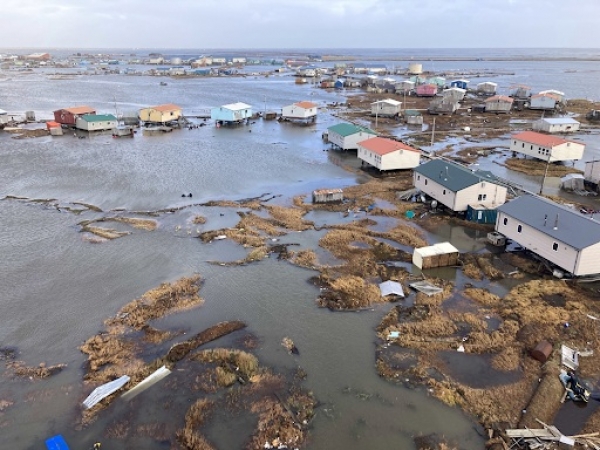
Rick Thoman, a climate specialist at the UAF Alaska Center for Climate Assessment and Preparedness, is the six-time editor of the Arctic chapter. Thoman also authored a section on the impacts of Typhoon Halong’s remnants in Southwest Alaska.
"The value of the Arctic Report Card is that it helps to put what we're seeing here in Alaska in the broader context,” Thoman said. “The Arctic is 20 times as big as Alaska, so these kinds of reports help to put our experience in that pan-Arctic view. In Alaska, our little piece of the Arctic was cold this winter, but on the Arctic scale, warmth dominated."
Read More: University of Alaska Fairbanks
Image: Extreme high water driven by the remnants of Typhoon Halong floods Kipnuk, Alaska, in October 2025. (Credit: Photo courtesy of the Alaska National Guard)