

Researchers say two more large calving events are likely.
Researchers say two more large calving events are likely.
An international research team led in part by the University of Ottawa reports that Petermann Glacier in northwest Greenland calved a 76.4 km² ice island on August 4, 2026, marking the glacier’s largest loss of floating ice since 2012 and the largest Arctic calving event since 2020.
The newly formed tabular iceberg detached from the glacier’s floating ice tongue and is estimated to be up to 150 metres thick. With a surface area roughly comparable to Manhattan Island, the ice island offers scientists a rare opportunity to study how large Arctic ice masses form, drift and break apart over time.
The event was detected by Adam Garbo, a PhD student in glaciology at uOttawa’s Department of Geography, Environment and Geomatics, as part of ongoing collaborations among the University of Ottawa, the University of Stirling, Environment and Climate Change Canada, Lancaster University, and the University of Leeds.
Read More: University of Ottawa
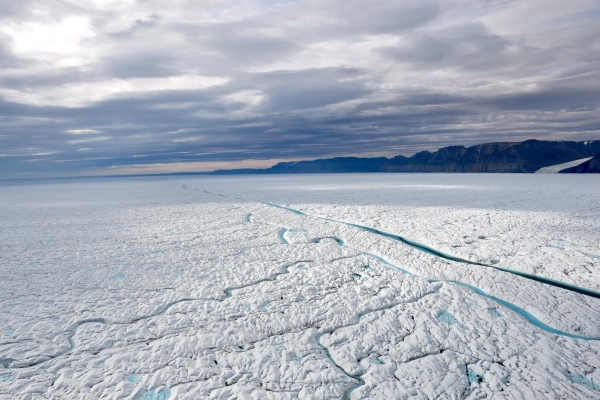
Image: Petermann Glacier - Photo: Adam Garbo


