Early detection could be the difference between a healthy peanut crop and a devastating outbreak of Sclerotinia blight — a fungal disease capable of causing significant yield loss.
Early detection could be the difference between a healthy peanut crop and a devastating outbreak of Sclerotinia blight — a fungal disease capable of causing significant yield loss.
Sweet, salty, crunchy, or creamy — no matter how it's munched, the Virginia peanut has been a cash crop for the commonwealth for much of the last two centuries.
But a fungal disease called Sclerotinia blight has decimated peanut plant populations in recent years, with severe outbreaks causing up to a 50 percent yield loss.
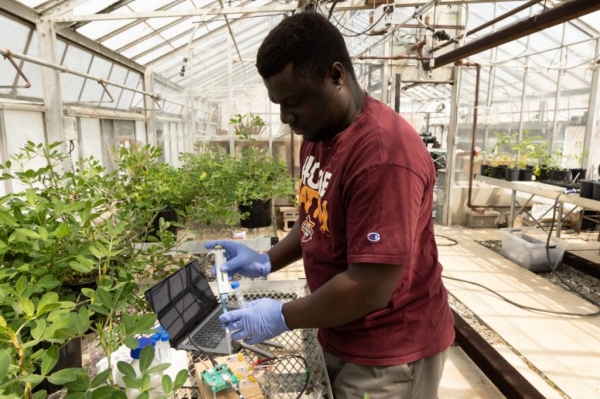
Virginia Tech researchers hope to help farmers detect and prevent its spread by building sensors that can detect infection early.
Read More: Virginia Tech
Image: Frank Erukainure (pictured) and his advisor developed an electrochemical sensor that detects Sclerotinia blight in peanut plants by measuring elevated oxalic acid levels — an early biochemical signal of infection. Photo by Suzanne Pruitt for Virginia Tech.