

Polyvinyl chloride, or PVC, is among the most common plastics on the planet but also one of the hardest to recycle responsibly.
Polyvinyl chloride, or PVC, is among the most common plastics on the planet but also one of the hardest to recycle responsibly. In a new study in Nature, scientists describe a method to strip chlorine from PVC and convert the remaining material into synthetic lubricant-based oils that perform competitively with commercial products.
Virginia Tech chemist and chemical engineer Guoliang “Greg” Liu and his lab have developed a process that converts the plastic polyvinyl chloride (PVC) into polyalphaolefin, a key component in lubricants such as engine oil.
Published Aug. 5 in the journal Nature, the research could help address two environmental challenges: recycling one of the world's most difficult plastics and producing a valuable industrial material.
Because of its chlorine content and the variety of additives used by different manufacturers, PVC is among the hardest plastics to recycle. As a result, much of it ends up in landfills.
Read More: Virginia Tech
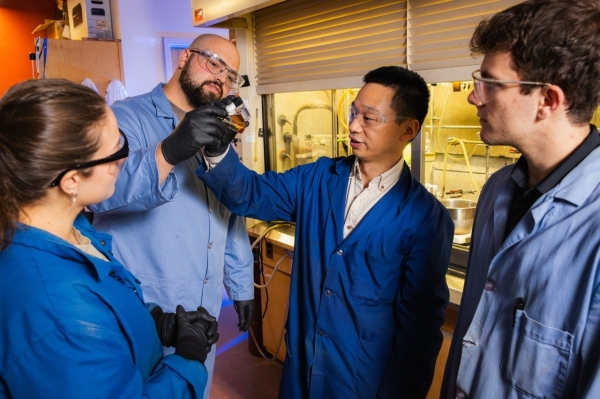
Image: Researchers in the Liu Lab examine samples of engine oil created from upcycled plastic waste. Photo by Luke Hayes for Virginia Tech.


