

Many of the Antarctic’s smallest inhabitants have evolved over millions of years so their body fluids are similar in chemical composition to that of sea water.
Many of the Antarctic’s smallest inhabitants have evolved over millions of years so their body fluids are similar in chemical composition to that of sea water.
However, a combination of melting glaciers, increased rain and extreme weather events means that waters in some of the remotest parts of the planet are increasingly being exposed to a reduction in salt levels.
Scientists refer to this phenomenon as freshening, and a new study has highlighted the impact this could have on species living in the shallow coastal waters off Antarctica.
Read More: University of Plymouth
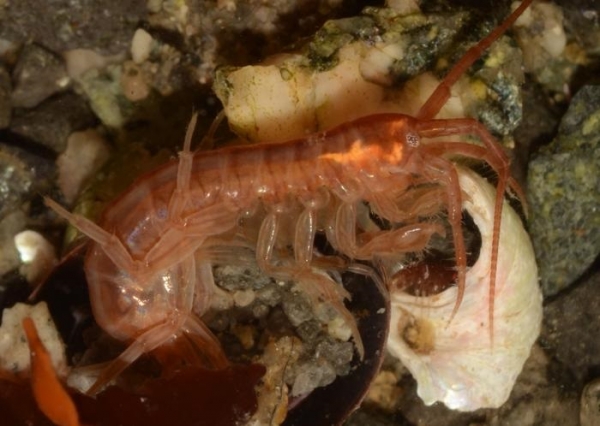
New research by the University of Plymouth and the British Antarctic Survey focused on the giant amphipod species Paraceradocus miersi, found in abundance in Antarctic waters and relatives of the sandhoppers on temperate beaches (Photo Credit: John Spicer/University of Plymouth)


