

Relatively few people have been to the Arctic, and even fewer have set foot in Antarctica.
Relatively few people have been to the Arctic, and even fewer have set foot in Antarctica. Most of us rely on our imaginations and media to visualize these landscapes and the ways they are changing.
Research shows that the Arctic is warming four times faster than the global average. The sea ice is melting, exposing more open ocean and throwing the ecosystem out of balance. The story of Antarctica contains fewer details, but emerging trends are concerning to researchers.
Conceptualizing this change can be challenging for those of us who have only glimpsed Greenland from the airplane window, but for someone with firsthand experience, it’s eye-opening.
Read More: University of Washington
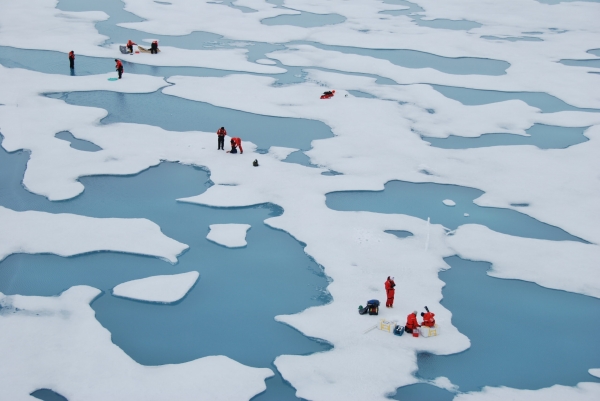
Image: Researchers collecting measurements of algae and sea ice properties in the Chukchi Sea in July 2011, as part of NASA’s Impacts of Climate on the Eco-Systems and Chemistry of the Arctic Pacific Environment (ICESCAPE) mission. The changes of the Arctic sea ice cover have repercussions for the functioning of the polar marine ecosystem. Photo: Melinda Webster


