

Global study of more than 23,000 marine mollusk species projects major shifts in body size by 2100 — including surprising growth in some animals and ocean regions.
Global study of more than 23,000 marine mollusk species projects major shifts in body size by 2100 — including surprising growth in some animals and ocean regions.
Research led by scientists at the University of Louisiana at Lafayette challenges a long-held assumption about the effects of climate change on marine life: warmer oceans won’t simply make animals smaller.
The study was led by Isaac Trindade-Santos, who conducted the research as a postdoctoral researcher in the UL Lafayette laboratory of senior author Dr. Craig McClain. Trindade-Santos is now a postdoctoral researcher at the University of Helsinki.
Researchers analyzed more than 23,000 species of marine mollusks — the group that includes clams, oysters, snails, squid, octopuses and chitons — and found that body size is projected to decline in most ocean regions by 2100. But those changes are far from uniform. Some groups could shrink dramatically, while others are projected to grow larger.
Read More: University of Helsinki
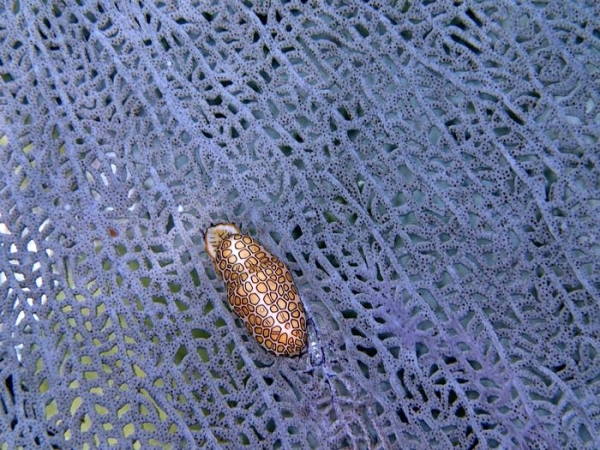
Image: Cyphoma gibbosum on Gorgonia ventalina. Tropical shallow-water molluscs face the sharpest warming trajectories; in our projections the North Atlantic combined strong warming with declining productivity, both associated with smaller mean body size in gastropods. (Credit: Craig McClain, University of Louisiana at Lafayette)


