

The Antarctic ozone layer is recovering, a major environmental success following the Montreal Protocol.
The Antarctic ozone layer is recovering, a major environmental success following the Montreal Protocol. As the ozone layer heals, less ultraviolet radiation reaches the Antarctic surface—a change usually viewed as beneficial for living organisms.
But a new field study suggests that the ecological story may be more complicated. Researchers from the Institute of Atmospheric Physics, Chinese Academy of Sciences, China together with collaborators from the University of Science and Technology of China and other institutions, found that reduced ultraviolet radiation can substantially weaken the ability of Antarctic tundra to absorb carbon dioxide. These results were recently published in Atmospheric and Oceanic Science Letters.
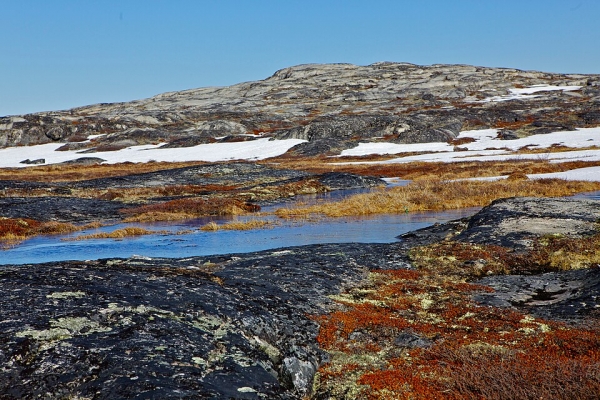
The team carried out in situ field experiments on Ardley Island in West Antarctica, where mosses and lichens form fragile tundra communities. Using transparent filters, the researchers simulated two levels of ultraviolet reduction—about 20% and 50%—while measuring carbon dioxide exchange, photosynthesis, and ecosystem respiration.
The results were striking. A 20% reduction in ultraviolet radiation weakened the tundra carbon sink by about half. A 50% reduction weakened it by about 80%, and in some observation periods the tundra even showed signs of shifting from a carbon sink to a carbon source.
Read More: Institute of Atmospheric Physics, Chinese Academy of Sciences
Photo Credit: LTapsaH via Pixabay


