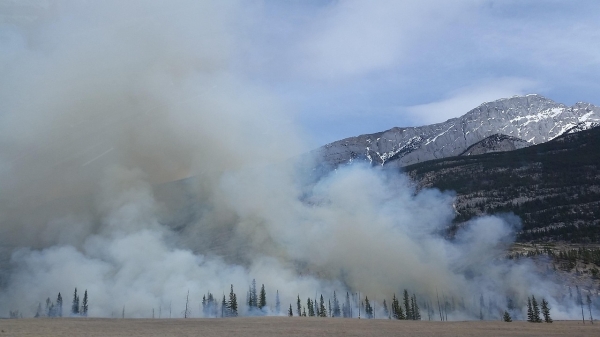
Wildfire-related PM2.5 linked to higher hospitalization risks for cardiovascular and respiratory disease and poorer survival among people with lung cancer.
Wildfire-related PM2.5 linked to higher hospitalization risks for cardiovascular and respiratory disease and poorer survival among people with lung cancer.
As climate change drives more frequent and intense wildfires, researchers at the Icahn School of Medicine at Mount Sinai have published two large-scale studies showing that wildfire smoke may pose greater health risks than other sources of air pollution, with higher risks of hospitalization for cardiovascular and respiratory disease and poorer survival among patients with lung cancer.
The studies, led by first author Min Zhang, PhD, and senior author Yaguang Wei, PhD, provide some of the strongest evidence to date that the source of air pollution matters, not just the amount.
Published in Nature Communications and The Lancet Oncology, the studies examined the long-term health effects of fine particulate matter from wildfires, known as PM2.5, a mixture of microscopic airborne particles that can penetrate deep into the lungs and enter the bloodstream. Across both investigations, the researchers found that wildfire-related PM2.5 was associated with greater health risks per unit of exposure than PM2.5 from non-wildfire sources.
Read More: The Mount Sinai Hospital / Mount Sinai School of Medicine
Photo Credit: jkburton via Pixabay