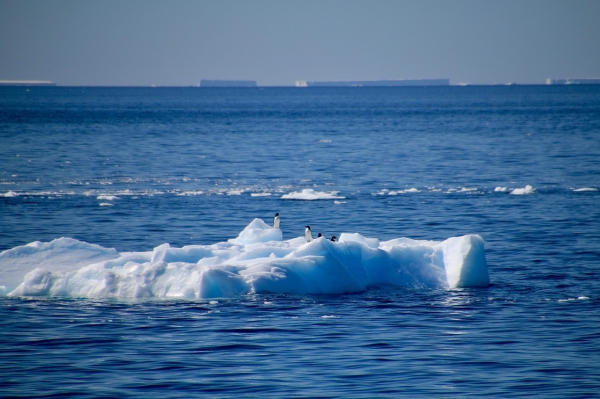
Geographers at FAU involved in international study – a lack of data hampers reliable prediction of rising global sea levels.
Geographers at FAU involved in international study – a lack of data hampers reliable prediction of rising global sea levels.
The ice mass in the Antarctic is an important indicator for rising sea levels triggered by climate change. In spite of numerous research projects and permanent satellite observation, however, there is a lack of data required to accurately predict ice loss. This is the conclusion reached by an international study involving geographers from Friedrich-Alexander-Universität Erlangen-Nürnberg (FAU). Especially the properties of the bedrock along the approximately 20,000 kilometer long coastline of the Antarctic are largely unexplored, and yet this would be crucial for the interpretation and modeling of complex ice movements. The results of the study have been published in the journal “Reviews of Geophysics”.
Roughly 90 percent of the entire ice in the world is saved in the Antarctic. If large quantities of these ice sheets were to melt, it would lead to a dramatic rise in global sea levels. “Thanks to satellite observations, we now have good data on ice movements and surface changes,” explains Dr. Thorsten Seehaus from the Institute of Geography at FAU. “However, we are lacking information on ice thickness and the bed topography along the coasts and underneath the ice shelves that cannot be observed from space.”
Read More: Friedrich-Alexander-Universität Erlangen-Nürnberg
Photo Credit: SarahNic via Pixabay