A Jupiter-sized world just 7.5 light-years away is cloudy, chemically complex, and, it turns out, more like home than anyone expected.
A Jupiter-sized world just 7.5 light-years away is cloudy, chemically complex, and, it turns out, more like home than anyone expected.
Using the James Webb Space Telescope, Brittany Miles, assistant astronomer at University of Arizona Steward Observatory, led a team that spent 11 hours staring at WISE 0855, the coldest known brown dwarf, collecting a spectrum of its light every 15 minutes. The result is the most detailed time-series portrait ever taken of this frigid world – and the first direct confirmation that water clouds on another body are changing thickness over time, just like weather on Earth.
The study, published in The Astrophysical Journal, reveals that WISE 0855's atmosphere is shaped by at least two distinct processes playing out simultaneously: water clouds at high altitudes that grow thicker and thinner as the object rotates, and deep chemical gases being dredged upward by convection from far below. Untangling those two signals – previously impossible with older telescopes – is what makes JWST data so powerful.
"This is the first time we've been able to confirm that water clouds are becoming thinner and thicker on a nearby world," said Miles, a postdoctoral researcher at Steward Observatory. "Before JWST, we only had photometry, which mixed up the effects of clouds, chemistry, and temperature all together. Now we can actually distinguish them."
Read More: University of Arizona
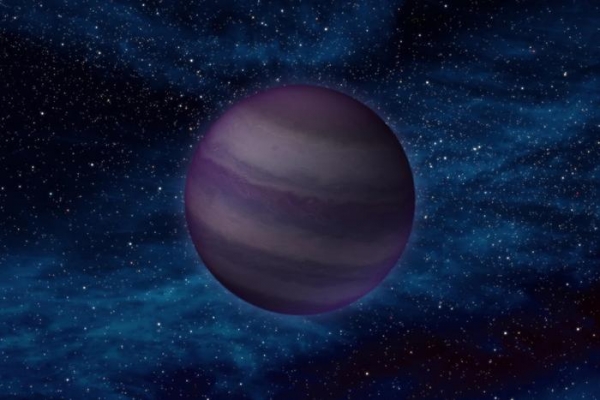
Image: Artist's concept of a brown dwarf. Brown dwarfs begin their lives like stars but they never accumulate enough mass to fuse atoms steadily at their cores and ignite with starlight. (Credit: NASA/JPL-Caltech)