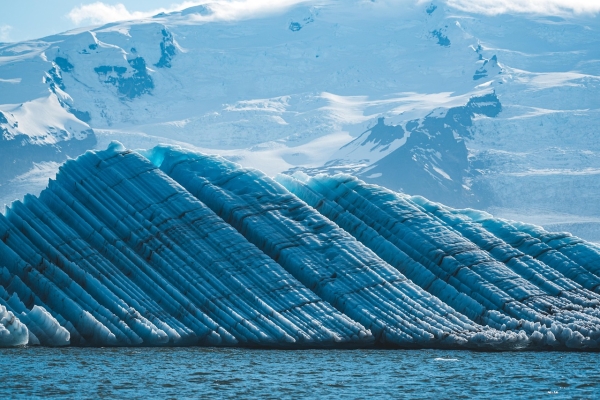
Glaciers ending in lakes, oceans or ice shelves make up 3.2% of the world’s glaciers, but lost 134bn tonnes of ice each year between 2000 and 2019, accounting for more than half of all glacier ice loss, a new study shows.
Glaciers ending in lakes, oceans or ice shelves make up 3.2% of the world’s glaciers, but lost 134bn tonnes of ice each year between 2000 and 2019, accounting for more than half of all glacier ice loss, a new study shows.
The team of environmental scientists found that these glaciers tend to be much larger than those ending on land, together covering more than half of the world’s glacier area. But for glaciers ending in lakes, size isn’t the whole story.
Publishing their findings in Nature Communications, the researchers found that glaciers ending in lakes lost ice around 57% faster, relative to their size, than those ending on land over the same period.
The study was led by scientists from the University of Birmingham and the University of Leeds. The team examined 216,502 glaciers worldwide, excluding the Greenland and Antarctic ice sheets, to identify which end in lakes, adding to existing records of those ending on land, in oceans or in ice shelves. They then compared ice flow and ice loss across all four glacier types.
Read More: University of Birmingham
Photo Credit: nicos_fotowelt via Pixabay