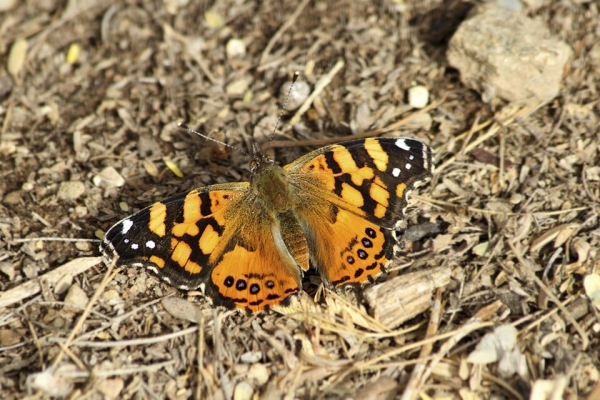
Tools like Claude and ChatGPT can help researchers monitor ecosystems by finding and extracting data from observations made in nature by everyday people.
Tools like Claude and ChatGPT can help researchers monitor ecosystems by finding and extracting data from observations made in nature by everyday people.
Millions of people worldwide, likely without realizing it, are capturing rare and valuable data that can help researchers assess trends in ecosystem health. Such data, however, are hidden in an ocean of comments on free online platforms like eBird and iNaturalist used by birdwatchers and other nature enthusiasts.
A new study led by the University of Michigan has shown that artificial intelligence can help researchers identify comments with pertinent data, then extract and categorize the information to build robust datasets. In this proof-of-concept study, the team found evidence of non-native plant species creeping into ecosystems along America’s West Coast that might have been otherwise missed.
“The potential here is really big,” said Hengxing Zou, the lead author of the study who performed the work as a postdoctoral scholar in the U-M Institute for Global Change Biology. “The approach is really versatile and we have a lot of data out there basically waiting to be mined.”
Read More: University of Michigan
Photo Credit: Alan Vernon via Wikimedia Commons (Used under a CC BY-NC-SA 2.0 license)