New research led by the University of Michigan provides utilities and policymakers with forecasts that can help them better prepare for future extremes in peak energy demand in the United States.
New research led by the University of Michigan provides utilities and policymakers with forecasts that can help them better prepare for future extremes in peak energy demand in the United States.
“We focused on the extreme peak demands because we want to keep our power systems reliable,” said Mai Shi, a postdoctoral research fellow at the U-M School for Environment and Sustainability, or SEAS. “If the system works for moderate conditions but fails in extremes, it doesn’t work. That’s not how we build the power grid. We need to plan for extremes.”
In the new study, supported by the U.S. National Science Foundation, Shi and colleagues modeled how those extremes will evolve between 2020 and 2060 with an eye to heating and cooling. Heating and cooling are among the top consumers of electricity for both residential and commercial buildings. The team analyzed how these would shape extremes in peak power demand against the backdrop of two important changes.
The first is climate change. Not only is the world’s average global temperature climbing, but heat waves are growing more intense and frequent, meaning cooling buildings will require more energy.
Read More: University of Michigan
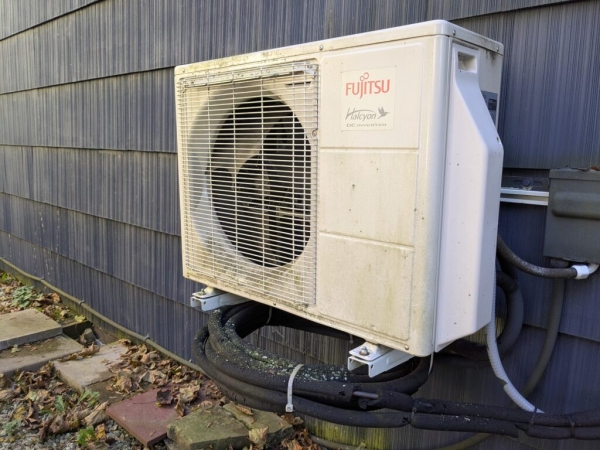
Image: Adoption of heat pump technology could have a greater impact on extreme peak energy demand in the U.S. going forward than climate change, according to new research led by the University of Michigan. Image credit: Matt Davenport/Michigan News