The Antarctic Intermediate Water (AAIW) – a vast layer of freshwater spanning much of the Southern Hemisphere’s four oceans – has rapidly reversed its long-term trends in salinity and density, according to new research led by the University of Melbourne and the Indian Institute of Science.
The Antarctic Intermediate Water (AAIW) – a vast layer of freshwater spanning much of the Southern Hemisphere’s four oceans – has rapidly reversed its long-term trends in salinity and density, according to new research led by the University of Melbourne and the Indian Institute of Science.
By helping store carbon, supply oxygen and drive global ocean currents, the AAIW plays a role in heat, freshwater and carbon redistribution around the planet. The research team say their findings, published in Nature Climate Change, show we may have underestimated the extent of deep-ocean warming and rising sea levels.
The research was led by Associate Professor Bishakhdatta Gayen, from the University of Melbourne and the Indian Institute of Science (IISc) and PhD student Kaushik Mishra (IISc), with co-author Professor Alberto Naveira Garabato (University of Southampton).
The research describes how, from 1995 to 2015, the AAIW was kept healthy by the Antarctic summer ice melt. From 2016 to 2024, that trend abruptly reversed when reduced freshwater input led the layer to become saltier, denser and deeper.
Read More: University of Melbourne
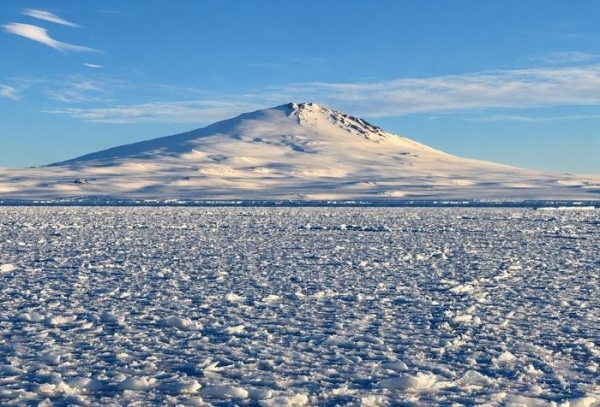
Image: Sea ice off Victoria Land, Antarctica, with Mount Melbourne in the background. (Credit: Alberto C Naveira Grabato)