KIT researchers and partners analyze caloric cooling technologies – Nature Review highlights progress, open questions, and pathways toward sustainable cooling systems.
KIT researchers and partners analyze caloric cooling technologies – Nature Review highlights progress, open questions, and pathways toward sustainable cooling systems.
As temperatures rise, the need for cooling is growing worldwide. Conventional cooling systems consume large amounts of electricity and use refrigerants with a high global warming potential. Caloric cooling could offer a sustainable alternative by using solid-state materials instead of conventional refrigerants. Researchers at Karlsruhe Institute of Technology (KIT), together with international partners, have analyzed the state of development of such systems. Their Review, published in Nature, shows the progress achieved so far and the challenges that still stand in the way of practical deployment. (DOI: 10.1038/s41560-026-02143-1)
According to the German Meteorological Service, June 2026 ended with a historic heat wave. As such extreme events become more frequent worldwide, energy demand for space cooling is expected to more than double by 2050. The rapid development of artificial intelligence is also increasing cooling demand, as more powerful data centers generate more waste heat and have to protect their servers reliably against overheating. Cooling is becoming increasingly important not only in buildings and data centers, but also in electronics, medicine, and logistics. So far, this demand has mainly been met by vapor-compression systems. Although mature, this technology consumes large amounts of electricity and can cause noise through its compressors.
Research by Dr. Jingyuan Xu shows that there are other ways to cool. The multiple award-winning early-career researcher heads the “Zero-Emission and Environmentally Friendly Heating and Cooling Technologies” research group at KIT’s Institute of Microstructure Technology (IMT). Her expertise also informs the current Review, which she led as the responsible author. “Caloric cooling offers two key advantages: It does not require refrigerants with a high global warming potential and can reduce energy consumption,” Xu explains.
Read More: Karlsruher Institut für Technologie (KIT)
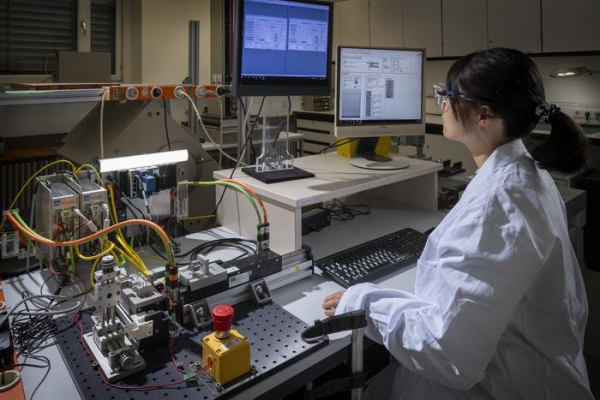
Image: With her research group, “ZEco Thermal Lab,” Dr. Jingyuan Xu develops environmentally friendly cooling solutions for various applications. (Photo: Markus Breig)