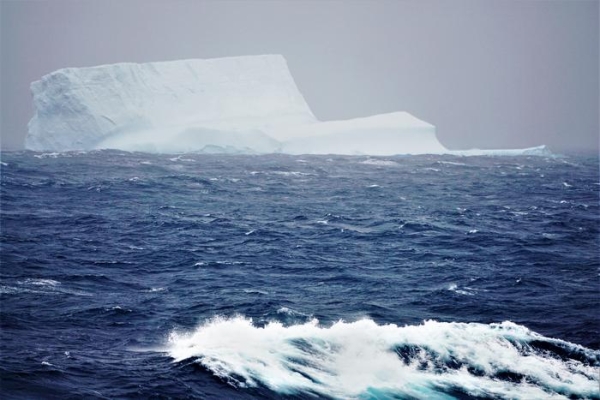
Climate observers have long tied the strength of a major ocean current to water temperatures in the so-called “cold blob” in the North Atlantic Ocean.
Climate observers have long tied the strength of a major ocean current to water temperatures in the so-called “cold blob” in the North Atlantic Ocean. The 965,000-square-mile area south and southeast of Greenland cooled by as much 1.8 degrees Fahrenheit over the past century as other ocean waters warmed.
Some indicators signal that a sustained decline in water volumes in the current, known as the Atlantic Meridional Overturning Circulation (AMOC), is a persistent cause of the blob’s lower temperatures. The current’s degradation began decades ago, a shift likely influenced by climate change that could reduce oceans’ absorption of carbon dioxide and heat, according to a team led by researchers in Penn State’s College of Earth and Mineral Sciences. But they cautioned, the link between AMOC and surface temperatures in the blob, also called the North Atlantic warming hole, is more irregular and complex than previously thought.
As published in the journal Nature Communications, the team found that the diminishing ocean current may impact the North Atlantic climate differently over time, with disparate phases in the relationship between AMOC strength and blob temperatures, said corresponding author Laifang Li, an assistant professor in the Department of Meteorology and Atmospheric Science. The work builds on their finding in 2025 that radiation from the atmosphere helps depress water temperatures.
Read more at: Penn State University
Battery cycler system in Olin Hall used by the Kalra research group to charge and discharge batteries to evaluate their performance in collaboration with Binghamton-based battery company Charge CCCV. (Photo Credit: Allison Usavage/Duffield Engineering)