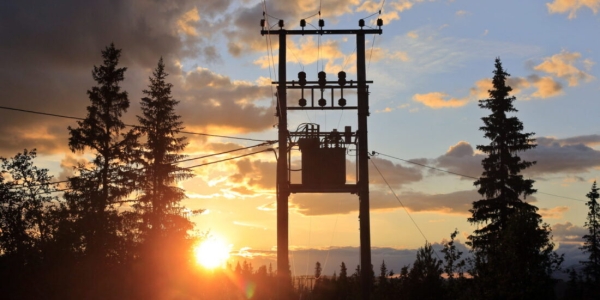
For some people, the overhead lines are a blight on the landscape; for others, they are a source of pride representing civilization and prosperity.
For some people, the overhead lines are a blight on the landscape; for others, they are a source of pride representing civilization and prosperity. These power lines that we have built up over time have provided society with light, heat, and the foundation for industry. Now, however, parts of this grid are beginning to show their age.
As some components reach the end of their service life, the need for renewal becomes urgent. So, how can we effectively allocate scarce resources to an increasing number of users when the power grid is rapidly reaching the end of its operational lifespan?
To address this urgency, Norway’s power industry and researchers have collaborated to develop a new system for renewal planning. The goal is to automate the initial screening process, making the task of planning the maintenance and replacement of grid components more manageable.
Read More at: Norwegian University of Science and Technology
An old power line might look beautiful at sunset—but what is its actual condition? And what is the risk of it collapsing, given factors like soil type, age, climate, and resistance to rot? (Photo Credit: Scanpix)