A new study led by University of Hawaiʻi at Mānoa researchers reveals how extreme ocean warming disrupts whale metabolism, nutrition and reproductive success, and what the 2026–27 El Niño could mean next.
A new study led by University of Hawaiʻi at Mānoa researchers reveals how extreme ocean warming disrupts whale metabolism, nutrition and reproductive success, and what the 2026–27 El Niño could mean next. As climate change drives increasingly intense marine heatwaves, scientists are uncovering how these extreme warming events disrupt the biology of humpback whales.
Earlier reports from NOAA, academic researchers, and regional monitoring programs documented troubling symptoms during the 2014–16 Pacific marine heatwave, known as the Blob: fewer humpback whale sightings in Hawaiʻi and Alaska, declines in calf numbers, and widespread signs of nutritional stress. To understand how whales responded physiologically, the UH researchers analyzed nearly eight years of biochemical records preserved in the baleen of stranded female humpbacks from Hawaiʻi. Prior to this study, the physiological mechanisms behind these population‑level changes remained unclear.
“These findings give us a window into how whales actually cope with extreme environmental stress,” said lead author Ching-Tsun Chang, a former graduate student in the Department of Oceanography at the UH Mānoa School of Ocean and Earth Science and Technology (SOEST) and now an assistant professor at National Sun Yat-sen University, Taiwan. “We’ve known from previous reports that humpback whales declined in number and body condition during the Blob. What we show here is the physiological story behind those patterns: how whales adjust their metabolism, how nutrient use shifts, and how reproduction may be compromised.”
Read More: University of Hawaii
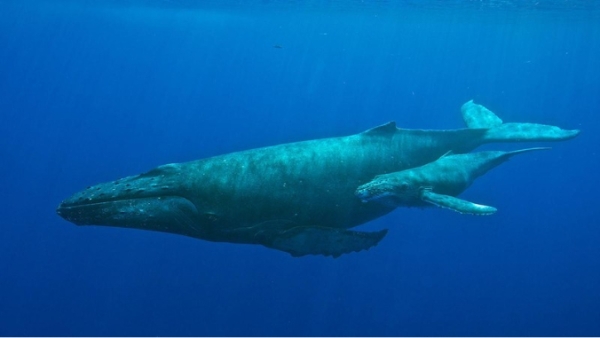
A humpback whale and calf (Photo Credit: NOAA’s Hawaiian Islands Humpback Whale National Marine Sanctuary)