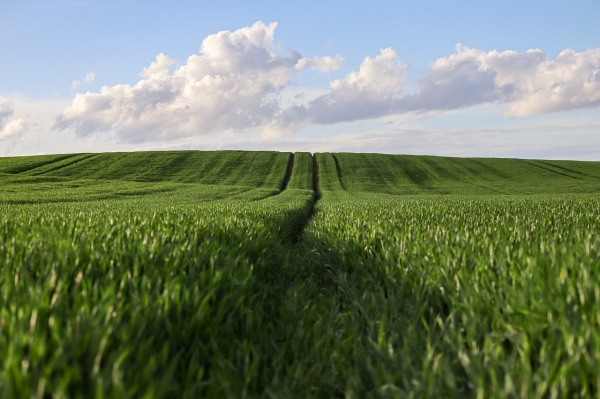
Field trials show that applying T6P as a foliar spray can increase photosynthesis by adjusting the balance between supply (photosynthetic sugar production) and demand (growth processes requiring sugars).
Field trials show that applying T6P as a foliar spray can increase photosynthesis by adjusting the balance between supply (photosynthetic sugar production) and demand (growth processes requiring sugars).
For decades, boosting photosynthesis in crops has been viewed as a scientific holy grail. Yet photosynthesis does not operate in isolation: it is tightly interwoven with environmental factors—light, CO₂, soil nitrogen, and water—as well as the plant’s own internal regulatory networks. These complex interactions mean that improving photosynthesis in real-world agricultural settings requires a holistic, systems-level approach rather than a single, linear solution.
A new review article on 'Improving photosynthesis in agricultural conditions' by researchers from Rothamsted Research and CIMMYT is being featured in 30th Anniversary issue of Trends in Plant Science celebrating “Big concepts – shaping the future of plant science”. One promising avenue highlighted in the review is the role of trehalose 6-phosphate (T6P), a key signalling molecule that coordinates how sugars produced during photosynthesis are used for growth and yield. Rothamsted’s work on T6P has revealed that aligning sugar production with sugar utilisation—particularly during critical stages such as wheat grain filling—may unlock significant gains in photosynthetic efficiency.
Field trials show that applying T6P as a foliar spray can increase photosynthesis by adjusting the balance between supply (photosynthetic sugar production) and demand (growth processes requiring sugars). By stimulating sugar utilisation into starch during grain filling, T6P effectively creates additional metabolic demand. In response, the plant’s flag leaves increase their photosynthetic activity, supplying more sugar to the developing grain.
Read More: Rothamsted Research
Photo Credit: rita2000 via Pixabay