

Flowers emit scented chemicals to attract pollinators, but this perfume — and how pollinators interact with the plant — can go through profound changes as a crop becomes domesticated.
Flowers emit scented chemicals to attract pollinators, but this perfume — and how pollinators interact with the plant — can go through profound changes as a crop becomes domesticated.
In a new study published in the Journal of Chemical Ecology, a team led by researchers in Penn State’s College of Agricultural Sciences found that domesticated flowers have different scent chemical profiles than wild plants in several species of squash. Additionally, the specialized pollinators of these plants — squash bees — detect different compounds, called floral volatile organic compounds (VOCs) in wild plants that they co-evolved with than in domesticated plants.
Margarita López-Uribe, Lorenzo L. Langstroth Early Career Professor and senior author on the study, said the findings provide new insights into plant-pollinator interactions in agroecosystems like farms and gardens.
Read more at: PennState University
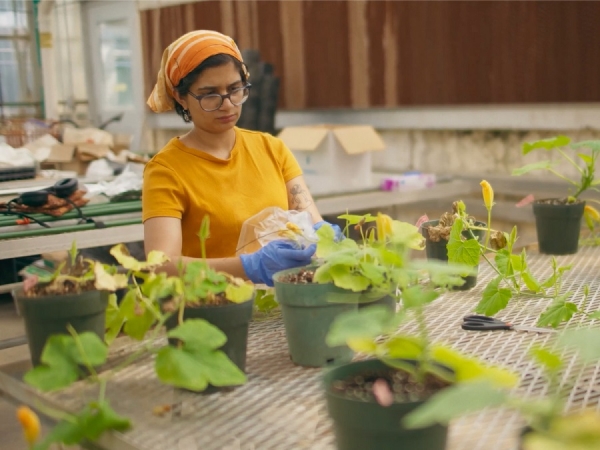
Avehi Singh, a consultant at the World Wildlife Fund and first author on the study, collects compounds from squash flowers. (Photo Credit: Day’s Edge Productions)


