

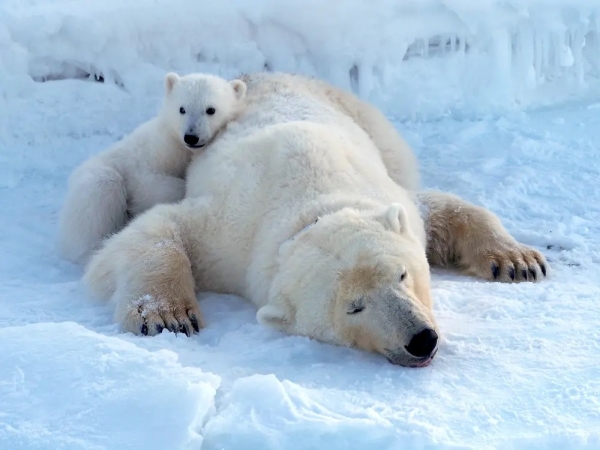
In parts of the Arctic, polar bears are in decline as sea ice, which they depend on to hunt, disappears. That is not the case, however, on the Norwegian island of Svalbard, where bears have actually managed to grow more plump even as ice melts away.
In parts of the Arctic, polar bears are in decline as sea ice, which they depend on to hunt, disappears. That is not the case, however, on the Norwegian island of Svalbard, where bears have actually managed to grow more plump even as ice melts away.
Polar bears hunt by stalking sea ice in search of seals, but sea ice is shrinking across much of the Arctic, which is warming nearly four times faster than the world as a whole. Increasingly, ice forms later in the winter and melts earlier in the spring, which means bears spend less time hunting and more time fasting.
A study along the western edge of Hudson Bay, in Canada, found that, over the last half-century, the number of polar bears in the region dropped nearly in half, and the bears grew measurably smaller. The average female lost 86 pounds, the research found, while the average cub lost 47 pounds.
Read more at: Yale Environment 360
A polar bear with its cub in Svalbard, Norway. Jon Aars / Norwegian Polar Institute


