

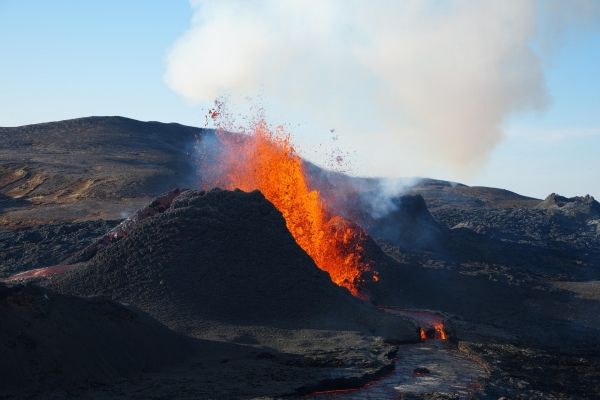
New research from the University of Copenhagen suggests that volcanic eruptions during the Ice Age may have triggered sudden climate change by disrupting the Atlantic Meridional Overturning Circulation (AMOC), causing temperatures to fluctuate between hot and cold for thousands of years.
New research from the University of Copenhagen suggests that volcanic eruptions during the Ice Age may have triggered sudden climate change by disrupting the Atlantic Meridional Overturning Circulation (AMOC), causing temperatures to fluctuate between hot and cold for thousands of years. The study contributes missing pieces to our understanding of what could cause Northern Europe's radiator to shut down.
If it goes down, Denmark's climate could change dramatically. The AMOC, Atlantic Meridional Overturning Circulation, pumps warm water from the southern hemisphere towards the north and is crucial to ensuring a warm and mild climate in Denmark. That is why it is also called Northern Europe's radiator. If it collapses, the Danish climate could change to something resembling that of Alaska, with winter temperatures down to minus 35 degrees.
However, global warming and the larger amounts of meltwater from the Arctic threaten the stability of the ocean current and its ability to pump warm water from the south to the north. However, scientists around the world continue to disagree on how bad the situation is, how great the risk of a complete collapse of the ocean current is, and how quickly it could happen.
Read more at: University of Copenhagen
Photo Credit: AllegroSympatico via Pixabay


