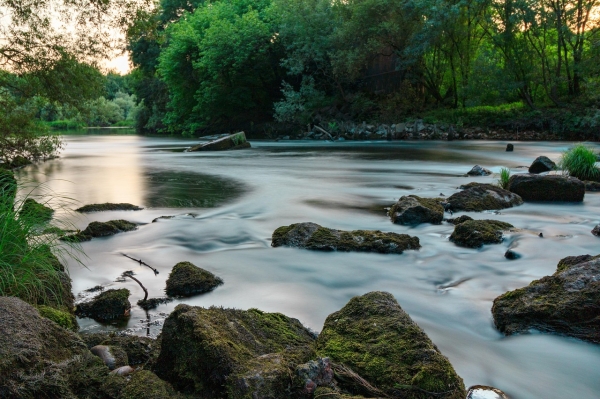
A major river restoration project in Cumbria has shown that reconnecting rivers to their floodplains can slow the movement of water and improve habitats.
A major river restoration project in Cumbria has shown that reconnecting rivers to their floodplains can slow the movement of water and improve habitats.
Research led by Newcastle University and the National Trust found that restoring a straightened, engineered channel to a more natural form significantly delayed the movement of flood waters downstream. On average, flood waves took 25 minutes longer to travel through the 1.5 km long restored reach compared to pre-restoration conditions, with a maximum time of 90 minutes.
The findings provide new, real-world evidence for the benefits - and limits - of nature-based solutions for flood management.
At Goldrill Beck, near Ullswater, a 1.5 km stretch of river was re-meandered and reconnected to its floodplain, as part of a project led by the National Trust. The goal was to slow water flow, store more water temporarily, improve habitats, protect infrastructure and reduce flood risk downstream.
Read More: Newcastle University
Photo Credit: vjgalaxy via Pixabay