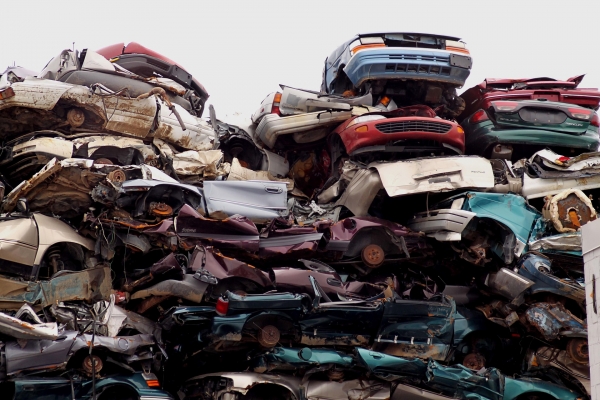
Each year, four to six million cars are scrapped in the EU—resulting in the loss of ressources.
Each year, four to six million cars are scrapped in the EU—resulting in the loss of ressources. The EU End-of-Life Vehicles Regulation is intended to ensure that these materials are recovered and reused in new vehicles in the future. Researchers at the TUM have now analyzed a process developed within the Car2Car research project that enables plastics to remain within the recycling loop. The study shows potential climate benefits as well as the possibility of meeting upcoming EU requirements.
When a vehicle is taken out of service, it is quickly reduced to its basic components: batteries, wheels, catalytic converters, and airbags are removed, and fluids are drained. What remains is sent to a shredder. The result is a heterogeneous mix of metals, textiles, plastics, foams, and composite materials. Extracting recyclable plastics from this mixture is complex, but it is becoming increasingly important for automakers and suppliers, as the EU is currently planning a new regulation on the treatment of end-of-life vehicles. Once the regulation comes into effect, the share of recycled plastics used in new vehicles that comes from post-consumer recycling is to be gradually increased to 25 percent.
A portion of this recycled content must come from “closed‑loop recycling,” meaning recycling plastics from end‑of‑life vehicles back into new vehicles. According to the EU proposal, this share should account for at least 20 percent of the required recycled content. “At first glance, that may not sound like much, but around 200 kilograms of plastic will be generated per end‑of‑life vehicle in the future,” says Magnus Fröhling, Professor of Circular Economy and Sustainability Assessment at TUM Campus Straubing. “In addition, plastics recycling has played only a minor role in the automotive industry so far, meaning we are still at a very early stage in this regard.”
Read more at: Technical University of Munich
Photo Credit: GarysLens via Pixabay