In many fish species, water temperature determines the sex of the fry.
In many fish species, water temperature determines the sex of the fry. This biological mechanism threatens to wipe out entire populations due to a shortage of females in the face of global warming. However, an international study conducted in Spain, France, and Brazil found that this well-known masculinization effect can be offset over generations. In a ten-year experiment involving more than 3,000 European seabass (Dicentrarchus labrax), scientists observed that the initial high proportion of male births under intense heat was reversed by the third generation, with more females being born.
The results were published in March in the journal Global Change Biology.
“We observed that the effects of warming aren’t cumulative for some strains of this species, which gives us hope regarding the impact of climate change on fish, at least as far as reproductive aspects are concerned,” says Maira da Silva Rodrigues, co-author of the study, which was conducted during her doctoral studies at the Botucatu Institute of Biosciences of São Paulo State University (IBB-UNESP) in Brazil with a scholarship from FAPESP.
Read More at: Fundação de Amparo à Pesquisa do Estado de São Paulo
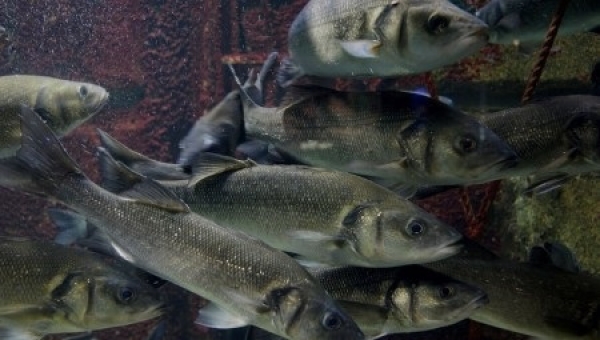
The European sea bass (Dicentrarchus labrax) is a distant relative of the fish known as robalo in Brazil (Photo Credit: Nasser Halaweh)