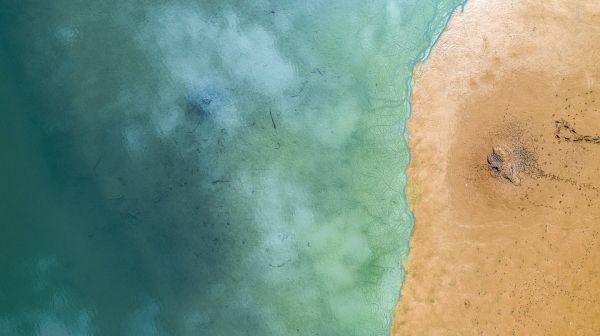
Every year 600-900 million tons of carbon flow through rivers to the ocean either as particles or in dissolved form.
articles
New Analysis Shows Potential for ‘Solar Canals’ in California
UC Santa Cruz researchers published a new study—in collaboration with UC Water and the Sierra Nevada Research Institute at UC Merced—that suggests covering California’s 6,350 km network of public water delivery canals with solar panels could be an economically feasible means of advancing both renewable energy and water conservation.
Home Blood Test for COVID-19 Antibodies Can Measure Vaccine Effectiveness and Progress Toward Herd Immunity
A new COVID-19 antibody blood test developed by Northwestern University scientists requires only a single drop of blood self-collected at home.
Artificial Light Affects Plant Pollination Even During the Daytime
Streetlights alter the number of flower visits by insects not just at night, but also during the daytime.
Stroke Risk Higher than Expected Among COVID-19 Patients
New research found patients hospitalized with COVID-19 had a higher risk of stroke, compared with patients who had similar infectious conditions such as influenza and sepsis in prior studies.
New Study Shows Microplastics Turn Into 'Hubs' for Pathogens, Antibiotic-Resistant Bacteria
It’s estimated that an average-sized wastewater treatment plant serving roughly 400,000 residents will discharge up to 2,000,000 microplastic particles into the environment each day.