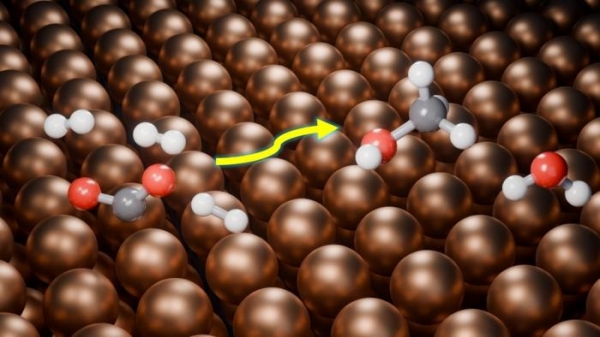
Scientists are increasingly exploring carbon dioxide (CO₂) hydrogenation – where CO₂ reacts with hydrogen over a catalyst to give rise to products like methanol – to convert CO₂ into useful chemicals and fuels.
 ENN
Environmental News Network -- Know Your Environment
ENN
Environmental News Network -- Know Your Environment

Scientists are increasingly exploring carbon dioxide (CO₂) hydrogenation – where CO₂ reacts with hydrogen over a catalyst to give rise to products like methanol – to convert CO₂ into useful chemicals and fuels.
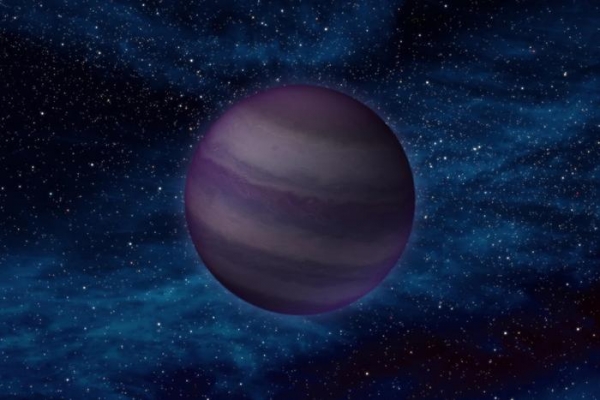
A Jupiter-sized world just 7.5 light-years away is cloudy, chemically complex, and, it turns out, more like home than anyone expected.

A new framework designed to guide one of the hardest decisions in conservation—whether to move a species outside its historical range to save it from extinction—has been published in Conservation Science and Practice, capping a multi-year, Pacific-wide effort in which the University of Hawaiʻi at Mānoa played a central supporting role.

Co-founders Aleks Banaś and Zachary Rapaport see architecture and farming as deeply complementary disciplines.
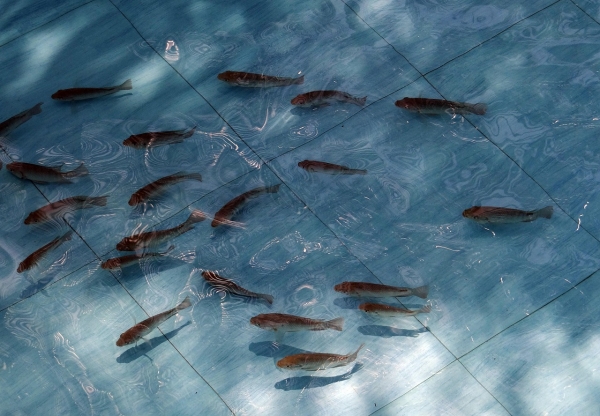
In the world of aquatic life, the Mozambique tilapia (Oreochromis mossambicus) is remarkably tolerant to salt water, surviving in habitats ranging from fresh water to hypersaline ponds three times saltier than the ocean.

By rethinking how large cloud computing systems operate, Associate Professor Christina Delimitrou seeks to make data centers more energy efficient.



