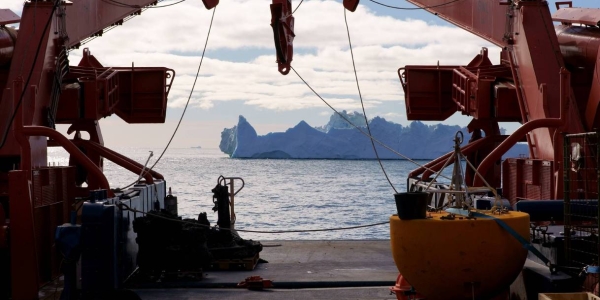
Ocean currents move water around the globe in a vast circulation system.
 ENN
Environmental News Network -- Know Your Environment

Ocean currents move water around the globe in a vast circulation system.
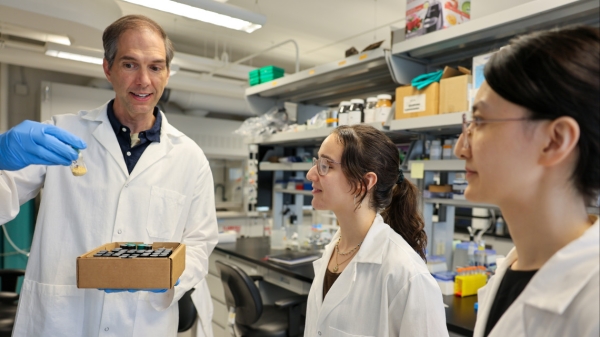
Among the technical inquiries spanning topics like cyclodextrin polymers and mass spectrometry that were stacked in Damian Helbling’s inbox was a question about four golden retrievers.

The risk of relying on uncertain carbon removal projects can now be quantified using a new standardised metric that can be applied across all such schemes, irrespective of the technology used.
Researchers say Carbon at Risk (CaR), which measures the risk that carbon removal falls short of what was initially contracted, could help regulators, buyers, insurers and investors build diversified portfolios and unlock the massive investment needed to limit global warming to 1.5°C.
Carbon removal projects, ranging from nature-based approaches such as afforestation to more engineered carbon capture technologies, aim to take CO₂ out of the atmosphere and store it for a meaningful period of time.
Read more at: University of Exeter
Photo Credit: Bergadder via Pixabay
A collaboration between researchers at Cornell and City University of Hong Kong has produced a new computational tool that could help overcome one surprisingly persistent obstacle to the efficient production of so-called green hydrogen: bubbles.
Green hydrogen, produced by splitting water using electricity from renewable sources, offers a promising alternative to fossil fuels, particularly for industries such as steelmaking and chemical manufacturing.
The researchers developed a computer model that reveals how bubbles forming during water electrolysis interfere with the process and increase the energy required to produce hydrogen. Their findings, published Nov. 9 in the journal EES Catalysis, identify a critical bubble size beyond which energy losses increase dramatically, providing a potential roadmap for designing more efficient hydrogen-producing equipment.
Read More at: Cornell University
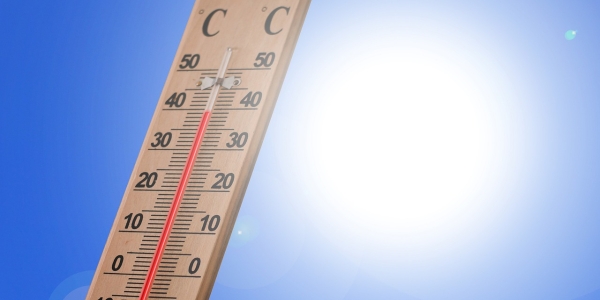
A new study has found a self-reinforcing interaction between temperature, soil moisture, and atmospheric pressure is being triggered at high temperatures, making extreme heatwaves 10 percent hotter than they would otherwise be.
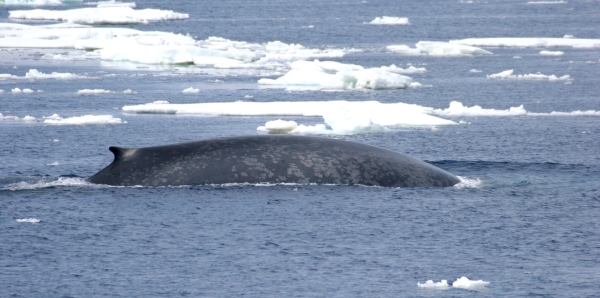
Antarctic blue whales appear to be creeping back from the brink of extinction after 50 years of protection. A new study estimates the total population at 4,018, up from 418 after the last reported whale catch in 1973.